Skip to content

Yersinia pestis: Discovery and The Third Pandemic
The Third Pandemic began in the Chinese province of Yunnan spreading to Hong Kong before being carried via steamship to the rest of the world. Unlike the other two pandemics, however, the epidemic spread was mostly limited to docks and coastal cities (except for China, India and a few subtropical regions) (Cohn, 2008).
Yersinia pestis is one of three Yersinia species that are human-pathogenic, it is a non-motile, non-spore forming Gram-negative coccobacillus (short rod) which upon Giemsa, Wright's or Wayson Gram stain has a bipolar stain described as a "safety pin" shape (Barbieri et al., 2020; Zietz & Dunkelberg, 2004). Yersinia pestis was first correctly isolated and identified in 1894 during an outbreak in Hong Kong during the third pandemic by Alexandre Yersin (Glatter & Finkelman, 2021).
There was a race to identify the causative agent of plague; Alexandre Yersin being sent by the French colonial minister and Kitasato Shibasaburō by the Japanese government and who arrived three days earlier than Yersin. Kitasato was also given immediate access to autopsies, being more senior and famous whilst Yersin was denied access for several days (Butler, 2014; Zietz & Dunkelberg, 2004).
Kitasato was the first to describe the new bacterium, releasing a preliminary note in the Lancet. However, Kitasato incorrectly stated that the plague bacillus was slightly motile and Gram-positive, he also described his blood organism as diplococcal and his bubo organism as bacillary whereas Yersin did not mention the motility, correctly identified the bacillus as Gram-negative and had accurate and consistent descriptions. Kitasato's following self-contradictions led to doubts about whether he was the co-discoverer of the plague and the different descriptions between the blood and bubo samples suggested the possibility that his samples were contaminated with Streptococcus pneumoniae (Butler, 2014; Zietz & Dunkelberg, 2004).
The plague bacterium underwent several name changes following changes in taxonomical classification; Bacterium pestis, Bacillus pestis, Pasteurella pestis, before being named posthumously after Yersin in 1970: Yersinia pestis (Zietz & Dunkelberg, 2004).
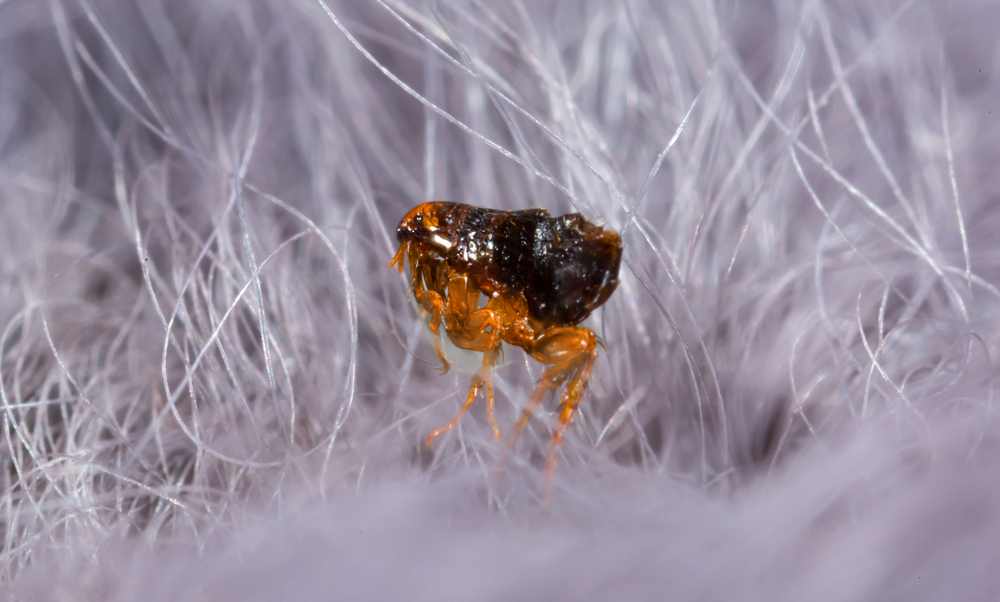
Although it was observed during the Third Pandemic that there was a connection between human and rat plague mortality, suggesting the black rat was involved in transmission of the plague, it was Paul-Louis Simond who demonstrated that plague was spread by rat-flea vectors in 1898 (Bramanti et al., 2019; Lynteris, 2022).
References
Barbieri, R., Signoli, M., Chevé, D., Costedoat, C., Tzortzis, S., Aboudharam, G., Raoult, D., & Drancourt, M. (2020). Yersinia pestis: the Natural History of Plague. Clinical microbiology reviews, 34(1), e00044-19. https://doi.org/10.1128/CMR.00044-19
Bramanti, B., Dean, K. R., Walløe, L., & Chr Stenseth, N. (2019). The Third Plague Pandemic in Europe. Proceedings. Biological sciences, 286(1901), 20182429. https://doi.org/10.1098/rspb.2018.2429
Butler T. (2014). Plague history: Yersin's discovery of the causative bacterium in 1894 enabled, in the subsequent century, scientific progress in understanding the disease and the development of treatments and vaccines. Clinical microbiology and infection : the official publication of the European Society of Clinical Microbiology and Infectious Diseases, 20(3), 202–209. https://doi.org/10.1111/1469-0691.12540
Cohn S. K., Jr (2008). Epidemiology of the Black Death and successive waves of plague. Medical history. Supplement, (27), 74–100. https://pmc.ncbi.nlm.nih.gov/articles/PMC2630035/
Glatter, K. A., & Finkelman, P. (2021). History of the Plague: An Ancient Pandemic for the Age of COVID-19. The American journal of medicine, 134(2), 176–181. https://doi.org/10.1016/j.amjmed.2020.08.019
Lynteris C. (2022). In search of lost fleas: reconsidering Paul-Louis Simond's contribution to the study of the propagation of plague. Medical History, 66(3), 242–263. https://doi.org/10.1017/mdh.2022.19
Zietz, B. P., & Dunkelberg, H. (2004). The history of the plague and the research on the causative agent Yersinia pestis. International journal of hygiene and environmental health, 207(2), 165–178. https://doi.org/10.1078/1438-4639-00259
How BioLabTests can support you
If you would like to explore our microbiology testing portfolio, please do not hesitate to get in touch with a member of our team on +44 (0) 333 240 8308 or simply complete our contact form.
Please note that BioLabTests does not test human, animal or food samples and we do not test for viruses.