 Skip to content

Yersinia pestis: Evolution, Diagnosis and Treatment
Yersinia pestis: Evolution, Diagnosis and Treatment Evolution Yersinia pestis diverged from Y. pseudotuberculosis which has the main transmission route of faecal-oral around 1,500-20,000 years ago and the acquisition of ymt gene allowed for the survival of the bacteria in fleas giving Y. pestis ectoparasite transmissibility ( Zhou & Yang, 2009). Additionally, the pPCP1 gene which encodes the Pla enzyme in Yersinia pestis can increase the bacteria's virulence, using the enzyme’s coagulase activity (active at ≤28 °C) to form a fibrin clot to obstruct the fleas digestive tract and the fibrinolytic activity (active at ≥37 °C ) to prevent blood [...]
Yersinia pestis: Discovery and The Third Pandemic
Yersinia pestis: Discovery and The Third Pandemic The Third Pandemic began in the Chinese province of Yunnan spreading to Hong Kong before being carried via steamship to the rest of the world. Unlike the other two pandemics, however, the epidemic spread was mostly limited to docks and coastal cities (except for China, India and a few subtropical regions) (Cohn, 2008). Yersinia pestis is one of three Yersinia species that are human-pathogenic, it is a non-motile, non-spore forming Gram-negative coccobacillus (short rod) which upon Giemsa, Wright’s or Wayson Gram stain has a bipolar stain described as a "safety pin" shape [...]
Yersinia pestis: Transmission and types of plague
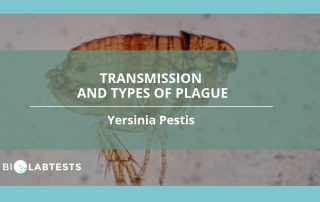
Yersinia pestis | Week 2 - Section 2 Transmission Yersinia pestis is a Zoonotic pathogen - a disease that can transmit from animals to humans or vice-versa - and can be transmitted to humans by being bitten by an infected animal, direct contact with infected animal tissues or through inhalation of aerosolised droplets from infected animals or humans. Animals can also be infected with Y. pestis through contaminated soil (Barbieri et al., 2020). Plague cycles at low rates through animal reservoirs, being transmitted by fleas and mainly infecting wild rodents which can carry the bacteria for longer periods, enabling [...]
Yersinia pestis
Plague pandemics, quarantines and plague doctors: Yersinia pestis The bacterium Yersinia pestis is the causative agent of the plague of which there are five principal forms: bubonic, septicaemic, pneumonic, meningeal and pharyngeal. Exploration of historical sources has led to the outline of three plague epidemics; the first pandemic known as the Justinian plague from the 6-8th century, the second pandemic encompassed the 13th-18th centuries and included the black death, and the third pandemic in which the bacterium was discovered (Barbieri et al., 2020). The second pandemic caused repeated outbreaks and epidemics in Venice through both land and its seaports, [...]

