Skip to content

Plague pandemics, quarantines and plague doctors: Yersinia pestis
The bacterium Yersinia pestis is the causative agent of the plague of which there are five principal forms: bubonic, septicaemic, pneumonic, meningeal and pharyngeal. Exploration of historical sources has led to the outline of three plague epidemics; the first pandemic known as the Justinian plague from the 6-8th century, the second pandemic encompassed the 13th-18th centuries and included the black death, and the third pandemic in which the bacterium was discovered (Barbieri et al., 2020).
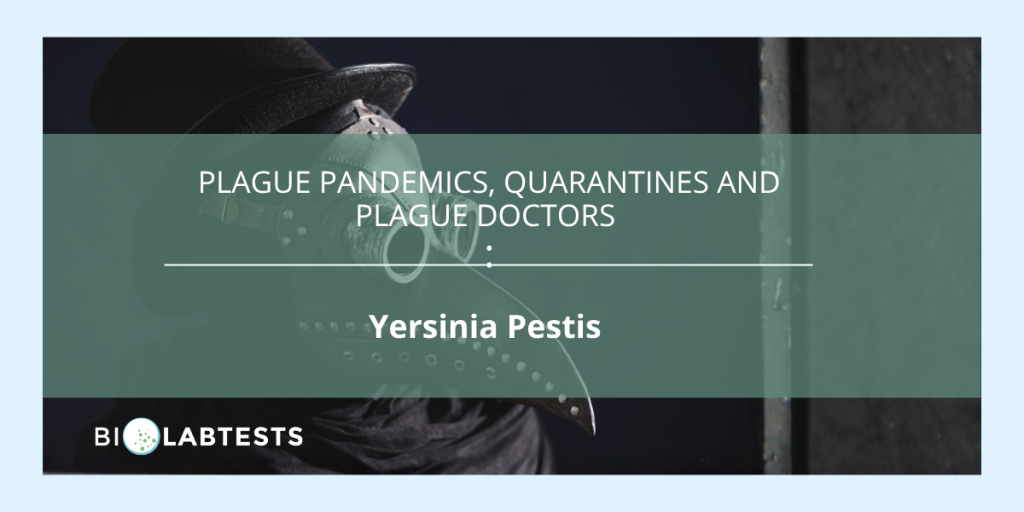
The second pandemic caused repeated outbreaks and epidemics in Venice through both land and its seaports, it is in Italy and Southern France in the later part of the black death in the 17th century where the plague doctors' 'uniform' of a beaked mask with glass eye sockets, waxed robe and cane was believed to originate although there are question on whether they were actually used during plague outbreaks (Ruisinger, 2020). At the time the transmission of the plague was thought to be spread through miasma; the miasma theory was a theory that diseases such as the plague and cholera were caused by miasma, a form of "bad air". In order to protect themselves from miasma, doctors would hold up aromatic herbs/perfumes soaked in vinegar in front of their face, this evolved into wearing a mask with glass eye sockets and a "beak" that can be filled with the herbs and held in front of them whilst allowing them their use of their hands. Plague doctors' robes were made from leather or waxed cloth in order to prevent miasma from reaching them, their cane allowed them to point out affected areas without getting too close and plague doctors only treated those with the plague in order to reduce the spread (Mussap, 2019).
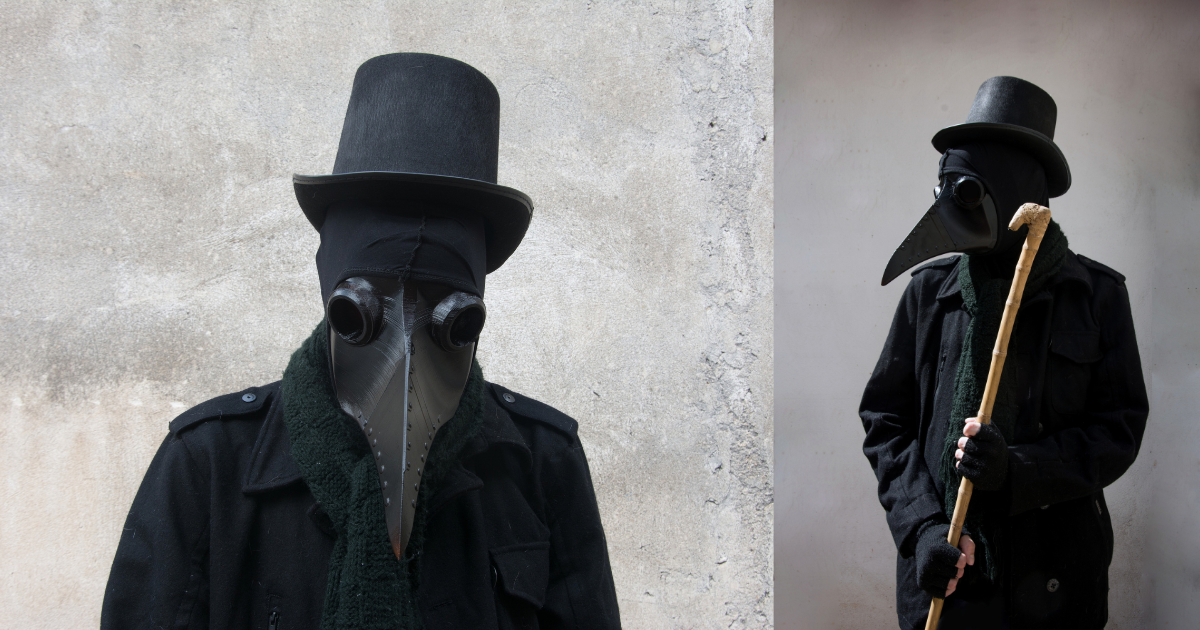
Despite the miasma theory being abandoned for the germ theory upon discovery of microbes, the plague doctors' garb would have some effectiveness in limiting the spread of the plague and reducing the infection risk. The robe being waxed may have helped prevent fleas, a vector for the disease, from being able to easily cling to their clothing to transport them or bite the wearer. The mask and cane creating distance will have aided in protecting against inhalation of aerosolised droplets from those with pneumonic plague.
It was during the later years of the second pandemic that the principles of quarantine were developed, and it is in Italy where the word quarantine was derived, coming from the Italian word quaranta meaning forty on account of the forty days of isolation. Venice built the first permanent plague hospitals or lazarettos on nearby islands where those who displayed plague symptoms, sailors arriving by port and cargoes were sent to be quarantined (Mussap, 2019; Konstantinidou et al., 2009; Tognotti, 2013).
References
Barbieri, R., Signoli, M., Chevé, D., Costedoat, C., Tzortzis, S., Aboudharam, G., Raoult, D., & Drancourt, M. (2020). Yersinia pestis: the Natural History of Plague. Clinical microbiology reviews, 34(1), e00044-19. https://doi.org/10.1128/CMR.00044-19
Konstantinidou, K., Mantadakis, E., Falagas, M. E., Sardi, T., & Samonis, G. (2009). Venetian rule and control of plague epidemics on the Ionian Islands during 17th and 18th centuries. Emerging infectious diseases, 15(1), 39–43. https://doi.org/10.3201/eid1501.071545
Mussap C. J. (2019). The Plague Doctor of Venice. Internal medicine journal, 49(5), 671–676. https://doi.org/10.1111/imj.14285
Ruisinger M. M. (2020). Die Pestarztmaske im Deutschen Medizinhistorischen Museum Ingolstadt [The "Plague Doctor's Mask" in the German Museum for the History of Medicine, Ingolstadt]. NTM, 28(2), 235–252. https://doi.org/10.1007/s00048-020-00255-7
Tognotti E. (2013). Lessons from the history of quarantine, from plague to influenza A. Emerging infectious diseases, 19(2), 254–259. https://doi.org/10.3201/eid1902.120312
How BioLabTests can support you
If you would like to explore our microbiology testing portfolio, please do not hesitate to get in touch with a member of our team on +44 (0) 333 240 8308 or simply complete our contact form.
Please note that BioLabTests does not test human, animal or food samples and we do not test for viruses.